
Archbold Area School District Relies on Their Propane School Buses

- Propane School Bus Fleet – 9
- Savings: Fuel Cost
- Students Transported Daily: 500+
In 2016, Archbold Area Schools in Fulton County, Ohio purchased their first propane-powered school bus and are now up to 9 buses, transporting more than 500 students daily across the district. These propane-fueled buses are used for school pickups and drop-offs, field trips, and sports team activities, covering an average of 8,300 miles annually per bus.
Linda Schmidt, Transportation Coordinator at Archbold Area Schools, stated two reasons why they decided to go with propane.
“The first reason to go propane was to go green. And the second reason was because our mechanic prefers conventional school bus design. So he jumped on board because propane only comes conventional.”
Propane–Reliable Fuel. Real Savings to Districts.
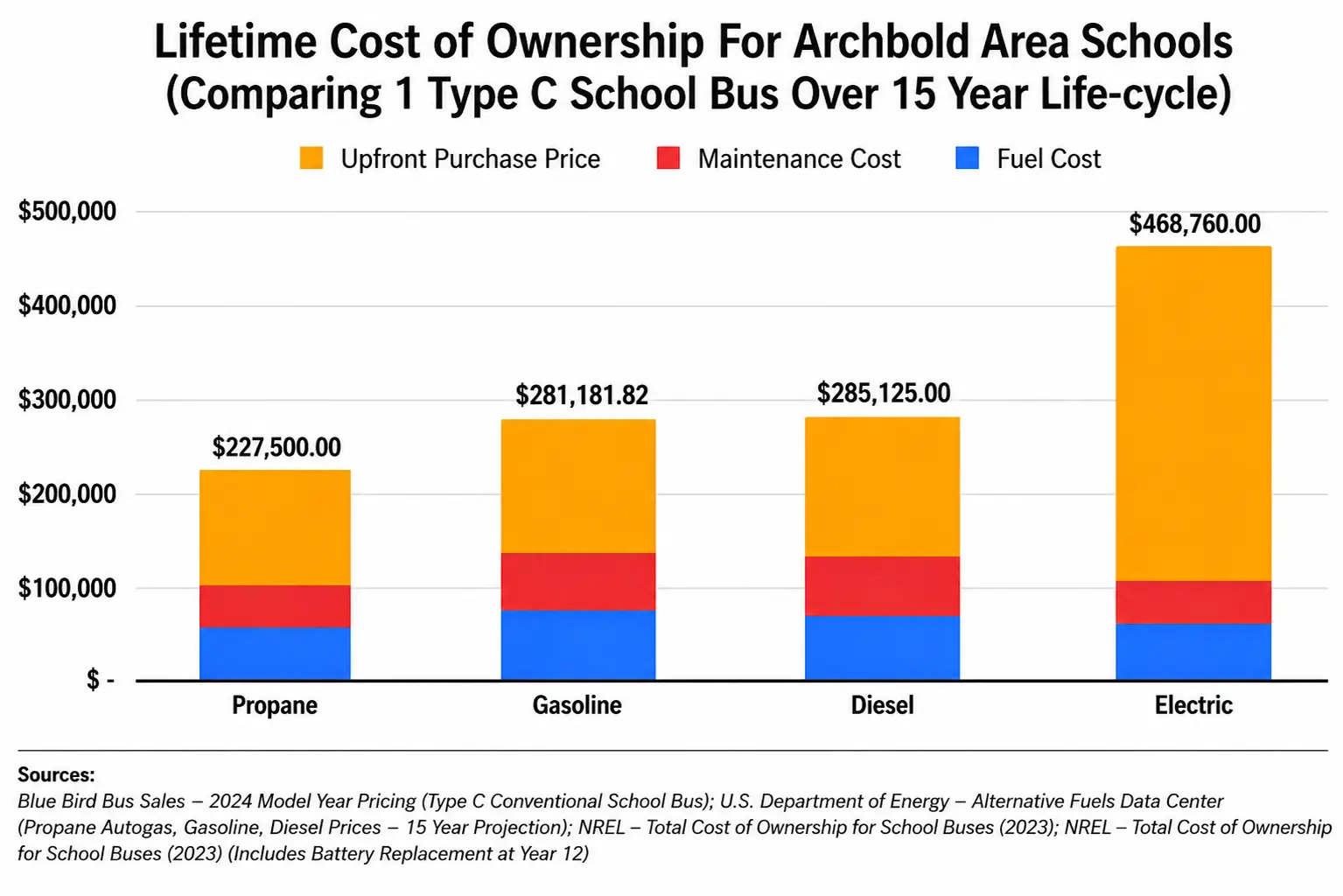
Propane offers a cost-effective solution for school transportation. Compared to diesel and electric buses, propane models are less expensive to fuel and maintain, allowing Archbold to direct more of its budget back into the school, like classrooms.
Jayson Selgo became Superintendent at Archbold in 2019 and quickly recognized one of the biggest benefits of switching the district’s buses to propane: lower fuel costs.
“We pay $1.49 per gallon for our propane. And so using that, based on mileage and using 9 propane buses on five of our seven regular routes, we estimated we are saving about $30,000 per year.”
Selgo said each bus, including some spare buses, travels more than 8,300 miles per year on average, with some logging as many as 16,000 miles annually.
Click to Enlarge
“Next year, our plan is to take one of the routes run by diesel and switch it over to propane and just making that transition will save us about $5 – $7,000 per year just for that one route.”
Archbold reported that 95% of their field trips, which would be sports and other field trips, are taken with their propane buses.
Schmidt commented, “The only thing I can say about that is they (Propane) just drive well, they’re quiet. The coaches prefer them because they can have a conversation. You know, you get a diesel bus and it’s pretty loud.”
They have even driven a propane bus approximately 304 miles to Columbus and back on a single tank, refueling only after returning to the district from a field trip. To support longer trips, the Ohio Propane Gas Association maintains a statewide fueling-station map, includes information to the AFDC propane station locator, and works directly with schools to identify propane fueling options along planned routes.
“My favorite part is they save money for the school district.”
Jayson Selgo, Superintendent
Cleaner, Lower-Emission Transportation
Propane is a nontoxic, low-emission fuel that won’t contaminate air, soil, or groundwater. It’s the third most widely used transportation fuel in the world—right behind gasoline and diesel—and is officially recognized as an alternative fuel under the Energy Policy Act of 1992.
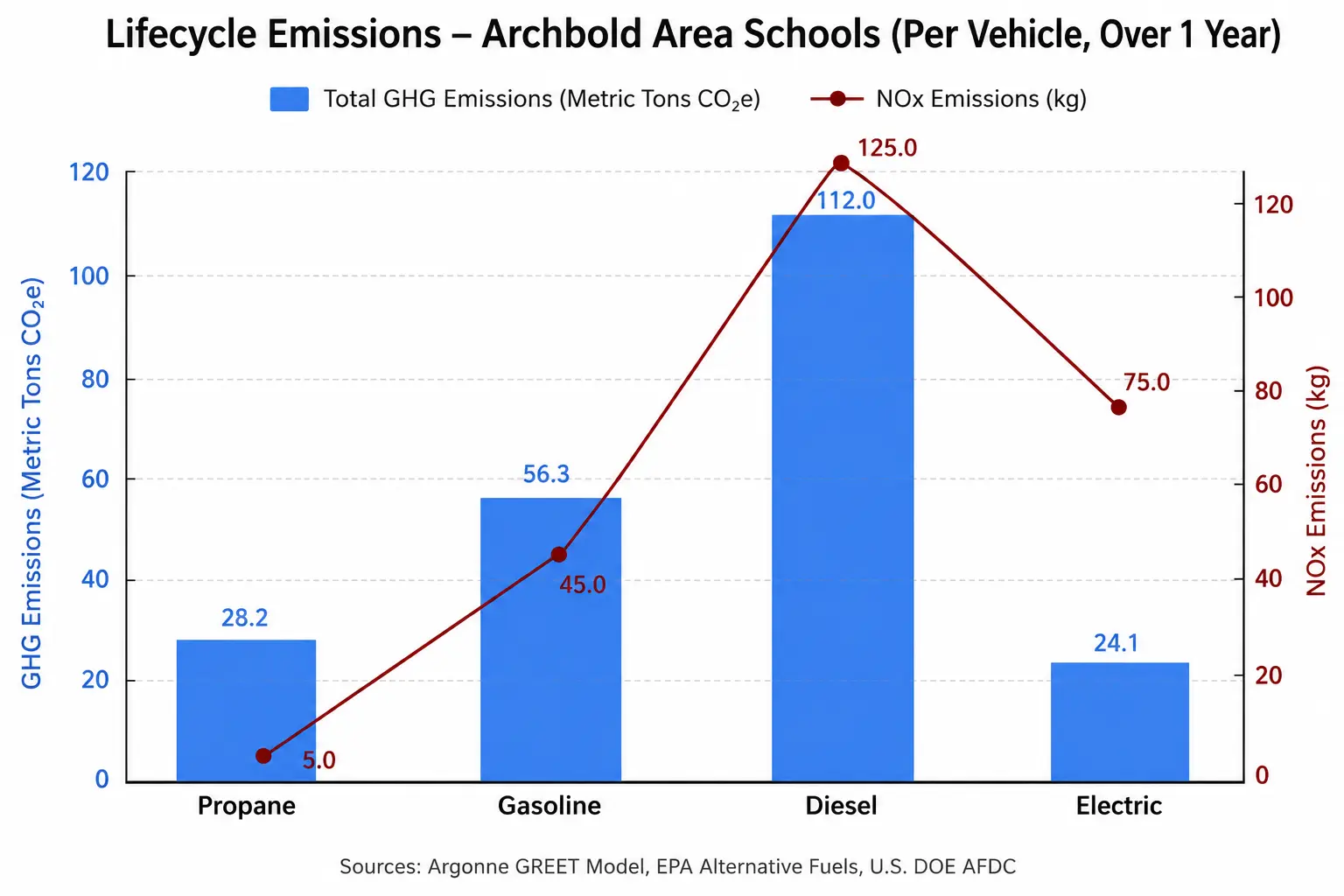
According to the U.S. Department of Energy Alternative Fuels Data Center (AFDC), propane buses emit up to 96% less nitrogen oxides than diesel buses. These harmful pollutants are associated with respiratory issues, particularly in children. By switching to propane, Archbold helps protect student health while reducing its carbon footprint.
According to Selgo, “We are saving about 49,000 pounds of CO₂ per year by using our 9 propane buses.” That equates to approximately six round trips in a diesel school bus from Archbold, Ohio to Orlando, Florida.
Click to Enlarge
Trusted by Schools. Proven on the Road
There are more than 1,100 propane school buses in operation across over 60 school districts throughout Ohio. Propane-powered vehicles are a proven safe choice for both drivers and passengers.
Propane fuel tanks are engineered for safety. Constructed from carbon steel, they’re 20 times more puncture-resistant than gasoline or diesel tanks. Each tank is built to meet rigorous standards set by the American Society of Mechanical Engineers, ensuring long-lasting durability for student transportation.
Propane also offers added safety at the pump. Propane has a narrower flammability range than gasoline or diesel, the risk of accidental ignition is lower. On top of that, every propane fueling station features a built-in, lock-off valve that automatically stops fuel flow if a pressure drop is detected—providing an extra layer of protection for school fleets.
Switching from Diesel to Propane Is Easier Than You Think
Transitioning a school bus fleet to propane is straightforward. According to Selgo, “It was pretty easy. There’s not been any bumps in the road.”
Most schools contact their local propane company to procure a propane contract and have a propane storage tank installed on-site, as seen at Archbold Area Schools. There are other fueling options available to schools including using a public fueling station or even a mobile fueling service. Learn more about fueling infrastructure options at: OhioAutogas.com
Selgo explained that the district’s propane supplier installed the on-site fueling infrastructure, while Schmidt emphasized how simple the fueling process is. “It’s pretty quick and easy. So, no complaints.”
She added that training a driver to fuel a propane bus takes only about five minutes, allowing any of the district’s bus drivers to handle refueling.
Propane school bus maintenance is easy and clean to work with.
According to Selgo, “We have an inhouse maintenance guy and all I know is he likes the propane because he doesn’t complain about it. He does a nice job. We’re fortunate to have him and if he supports the propane buses then it’s not causing him any issues. He’s very comfortable working with propane.”
“The biggest reason I like them is for one, they're quiet, they're green. So they don't stink. You don't have to plug them in. They warm up easily. I drive them and they just drive really nice and they're quiet.”
Linda Schmidt, Transportation Coordinator
Winter-Ready School Buses, Powered by Propane
Archbold’s propane buses start reliably in Ohio’s freezing winter mornings—without the need for costly engine block heaters, fuel additives, or backup generators that diesel and electric buses often depend on. This simplicity leads to less downtime and safer, more consistent transportation for students.
Selgo confirmed, “Excellent, No driving issues. We don’t have to plug them in. They start right up.” He even mentioned that in his area, other school districts often have a problem with their buses starting in the winter, but they never have that problem. “They fire right up, they warm up quicker, and I say they do an excellent job.”
$16,000 Available from the Ohio Propane Gas Association
The OPGA is offering schools new to propane up to $16,000 to help them immediately reduce transportation operation costs and reach carbon footprint goals. The OPGA propane fleet experts are available to help with a smooth transition to propane with fleet directors/managers, treasurers, and superintendents.
Learn more at: OhioAutogas.com/#funding